

Lattice Degeneration
Lattice degeneration is thinning of the retina’s outer edge marked by crisscross white lines; usually symptom-free but can create holes or tears that raise detachment risk.
Stargardt syndrome is an inherited juvenile macular degeneration caused by gene mutations, leading to gradual central vision loss.
Hear from Dr. Rosenfarb

Whether you prefer hands-on care, convenient telehealth visits, or self-guided learning, we have multiple ways to help you manage Stargardt Syndrome.

Start here. A member of our care team will review your condition and situation, answer your questions, and walk you through the treatment options that are the best fit for you.
Book your free assessment call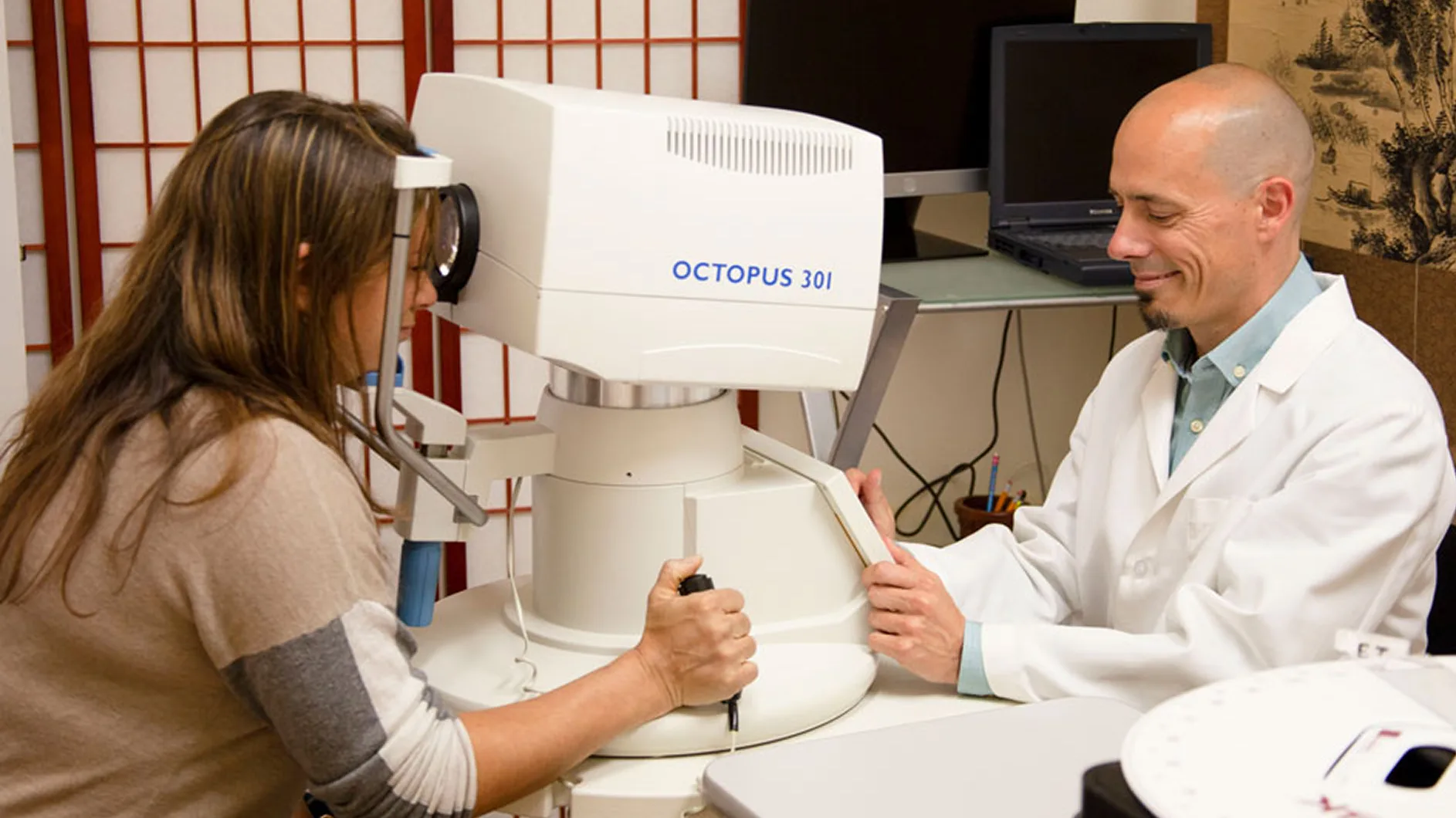
Combining acupuncture, laser therapy & diagnostics at Dr. Rosenfarb's office in New Jersey. 90% of patients see measurable vision improvements.
Learn more
One-on-one virtual sessions with Dr. Rosenfarb. Get personalized assessment and custom treatment plan from home.
Learn more
Scientifically-formulated supplements chosen by Dr. Rosenfarb to nourish your eyes and support healthy vision recovery.
Get supplementsDr. Rosenfarb's top-recommended supplements to nourish and protect your eyes.

Supplements
$60.00$49.00
Save 18%

Supplements
$70.00

Vitamins & Supplements
$30.00

Supplements
$30.00$25.00
Save 17%
Ready to take the next step?
Choose whatever feels right for you — no pressure, no commitment.
Rated 5 stars by 10,000+ Happy Patients Worldwide
A real patient shares their journey with our treatment approach.
"After just two weeks, my vision has improved significantly."
Fouad traveled from Dubai to receive treatment for Stargardt’s Syndrome, struggling with poor vision and extreme light sensitivity. After two weeks with Dr. Rosenfarb, he experienced significant improvements in visual acuity and comfort.
Common questions we get asked about Stargardt Syndrome.
Both conditions damage the macula, but Stargardt syndrome usually starts in late childhood or the teen years and is driven by a recessive genetic mutation, while AMD typically develops after age 55 and involves multiple genetic and environmental factors.
There is no FDA-approved cure yet. Current care focuses on protecting remaining vision, using low-vision aids, and monitoring emerging treatments such as gene therapy, stem-cell therapy, and complement inhibitors in clinical trials.
Protecting eyes from strong sunlight, eating a diet rich in leafy greens and omega-3 fatty acids, avoiding smoking, and managing overall health may help reduce additional retinal stress, though they cannot stop the genetic process.
High-dose vitamin A palmitate is generally discouraged because it can increase toxic by-products in ABCA4-related disease. Always consult your eye-care provider before starting any supplement regimen.
It follows an autosomal recessive pattern—both parents must carry one faulty ABCA4 gene copy for their child to be affected. Each pregnancy has a 25 percent chance of producing an affected child when both parents are carriers.
Yes. Studies investigating gene replacement therapies, novel vitamin A analogs, and stem-cell-based retinal repair are ongoing. Ask your retina specialist or visit ClinicalTrials.gov to see if you qualify for a study.
Discover other eye conditions that share similar causes, symptoms, or treatment approaches with the one you're exploring.
Lattice degeneration is thinning of the retina’s outer edge marked by crisscross white lines; usually symptom-free but can create holes or tears that raise detachment risk.
Rod-cone dystrophy is a genetic condition that causes progressive vision loss, often starting in childhood.
Usher syndrome combines inherited hearing loss with progressive night and peripheral vision decline from retinitis pigmentosa, often accompanied by balance problems.

