Best's Disease
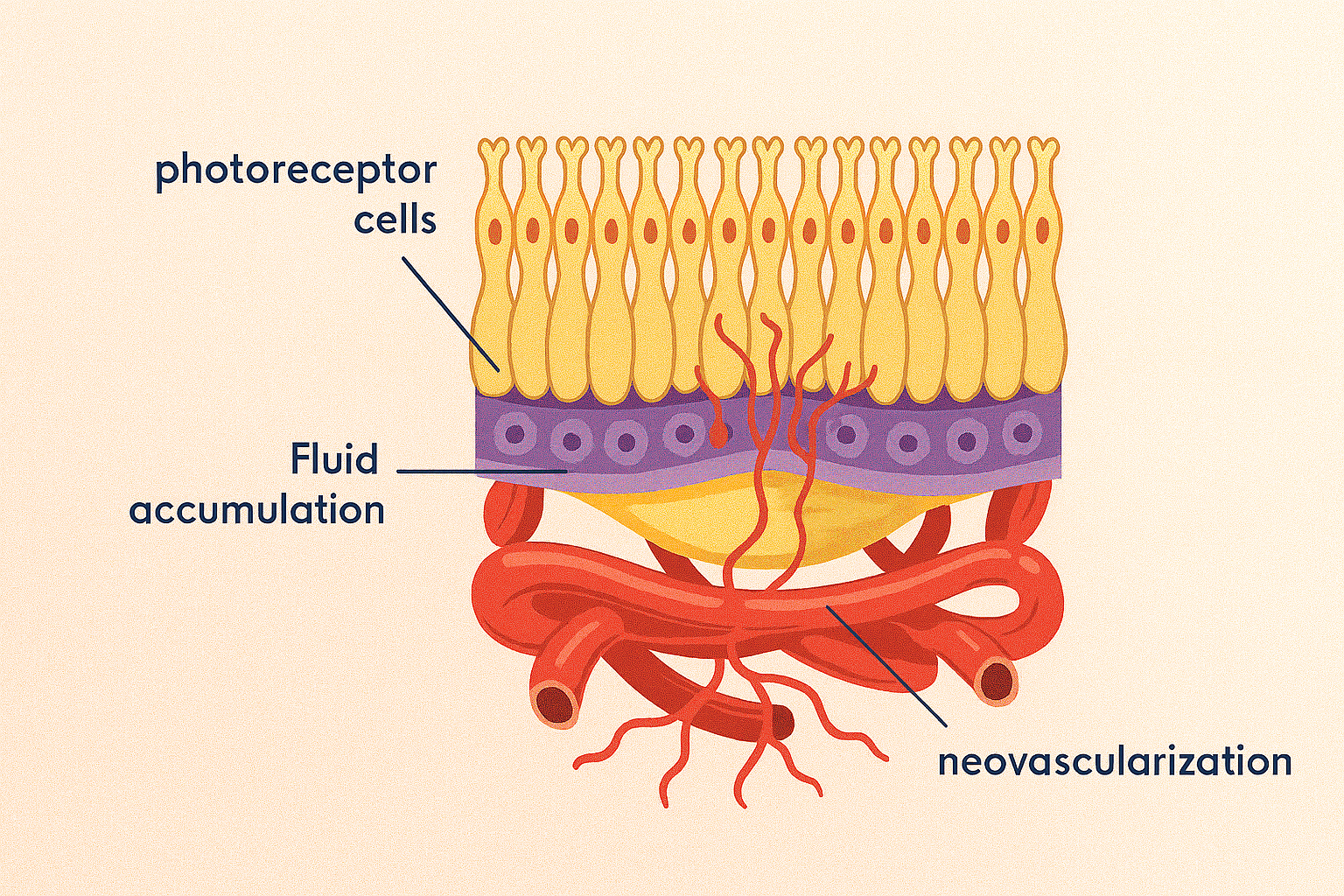
Best’s disease, also known as Best’s vitelliform macular dystrophy, is a hereditary (usually) form of progressive macular dystrophy.
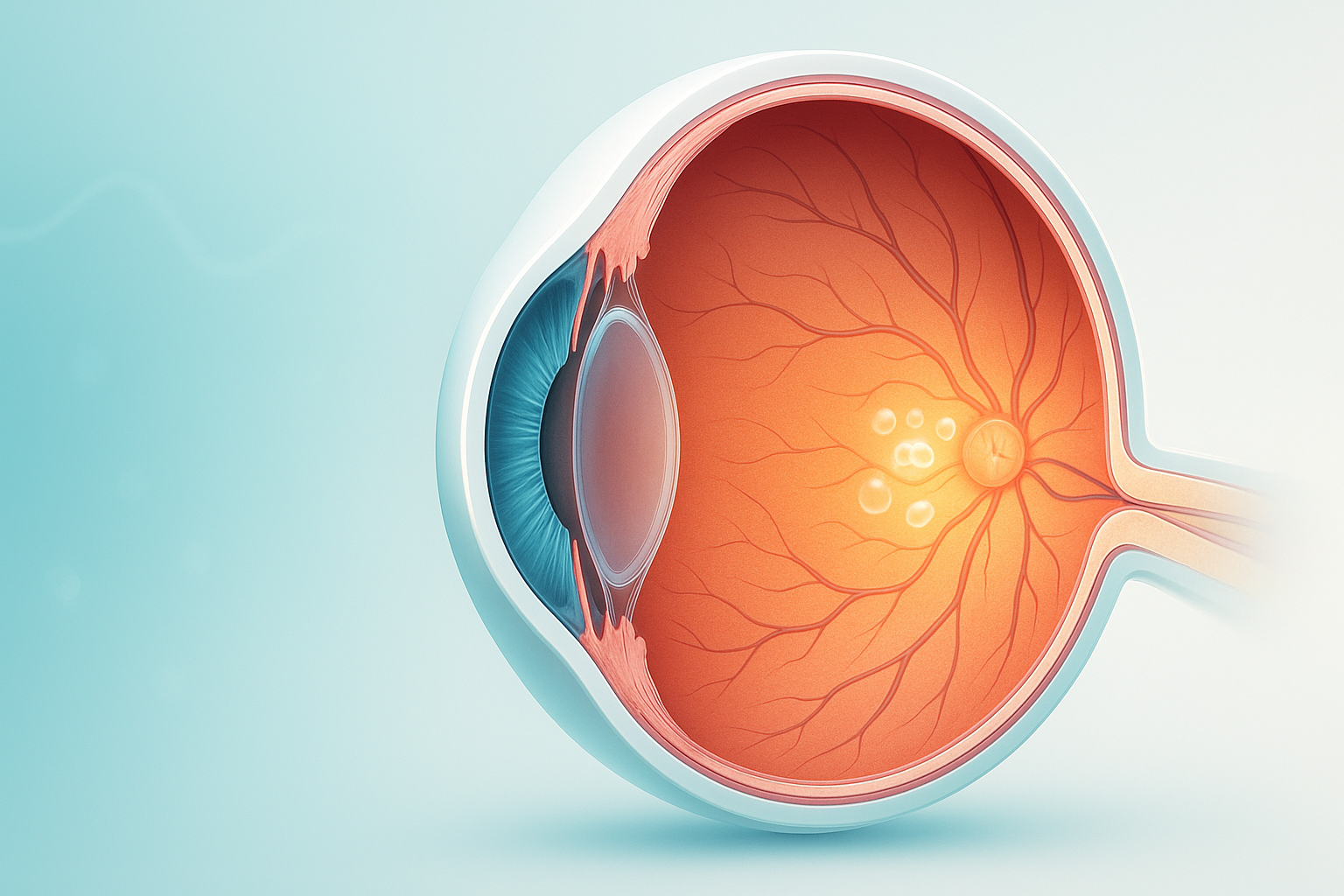
Macular edema, also called cystoid macular edema, is swelling in the retina’s center that blurs detail; our goal is early detection & integrative care to help protect sight.
Hear from Dr. Rosenfarb
Whether you prefer hands-on care, convenient telehealth visits, or self-guided learning, we have multiple ways to help you manage Macular Edema (Cystoid Macular Edema).

Start here. A member of our care team will review your condition and situation, answer your questions, and walk you through the treatment options that are the best fit for you.
Book your free assessment call
Combining acupuncture, laser therapy & diagnostics at Dr. Rosenfarb's office in New Jersey. 90% of patients see measurable vision improvements.
Learn more
One-on-one virtual sessions with Dr. Rosenfarb. Get personalized assessment and custom treatment plan from home.
Learn more
Scientifically-formulated supplements chosen by Dr. Rosenfarb to nourish your eyes and support healthy vision recovery.
Get supplementsDr. Rosenfarb's top-recommended supplements to nourish and protect your eyes.

Supplements
$65.00

Vitamins & Supplements
$30.00

Supplements
$30.00$25.00
Save 17%

Eye Drops & Lubricants
$30.00
Ready to take the next step?
Choose whatever feels right for you — no pressure, no commitment.
Common questions we get asked about Macular Edema (Cystoid Macular Edema).
People often say fluid behind the eye, but macular edema means fluid within the central retina (the macula), not behind the eyeball. The swelling disrupts fine detail vision.
Some post-cataract cases improve over weeks to months with drops and time. Edema from diabetes or vein occlusion usually needs medical treatment and close monitoring to prevent chronic changes.
Yes. Depending on the cause, one or both eyes can be involved. If only one eye is affected, the other may still be at risk and should be monitored on the schedule your doctor recommends.
Commercial air travel is typically safe, but schedule flights away from injection days and follow your retina specialist’s guidance. Flying does not usually worsen edema, though vision-related travel challenges may require planning.
Most people can continue moderate exercise. Avoid heavy straining right after injections or surgery and ask your doctor about limits if you have uncontrolled blood pressure, active inflammation, or recent complications.
Drive only if your vision meets legal standards and you feel confident. Night driving and glare can be difficult; consider anti-glare lenses and plan routes with good lighting. If vision fluctuates, arrange alternate transportation.
Screens do not cause or worsen the swelling, but glare and contrast can make blur more noticeable. Use larger fonts, higher contrast, regular breaks, and good ambient lighting to reduce visual fatigue.
Discover other eye conditions that share similar causes, symptoms, or treatment approaches with the one you're exploring.
Best’s disease, also known as Best’s vitelliform macular dystrophy, is a hereditary (usually) form of progressive macular dystrophy.
Central serous retinopathy is a condition that causes fluid to leak from the choroid layer into the macula, causing blurring or distortion of central vision.
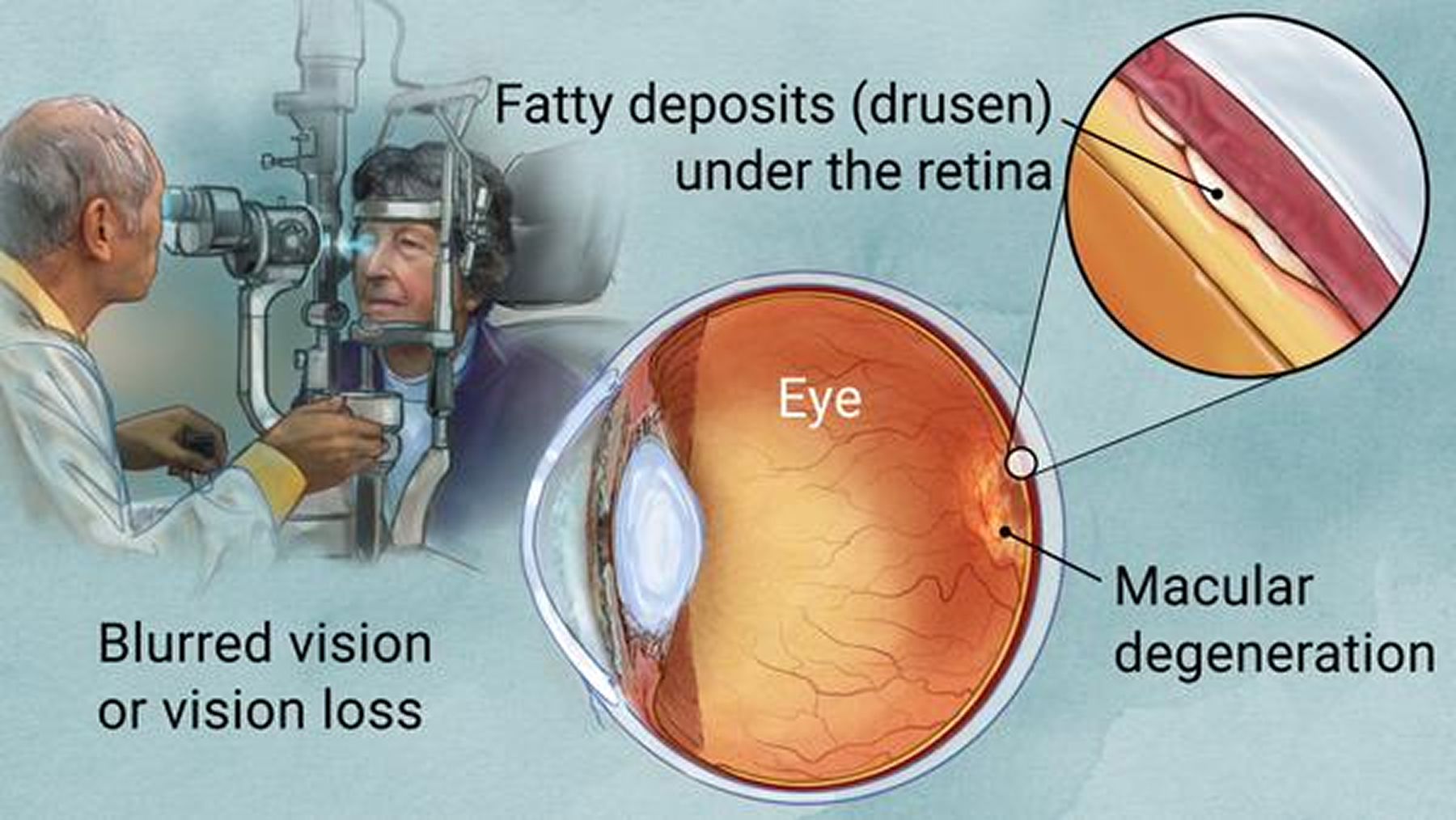
Macular degeneration erodes the macula and central vision, but it’s often a sign of broader circulation, inflammation, and energy imbalances.
Macular dystrophy is a rare genetic disorder that slowly damages the macula, the eye's center for sharp vision, resulting in progressive central vision loss.
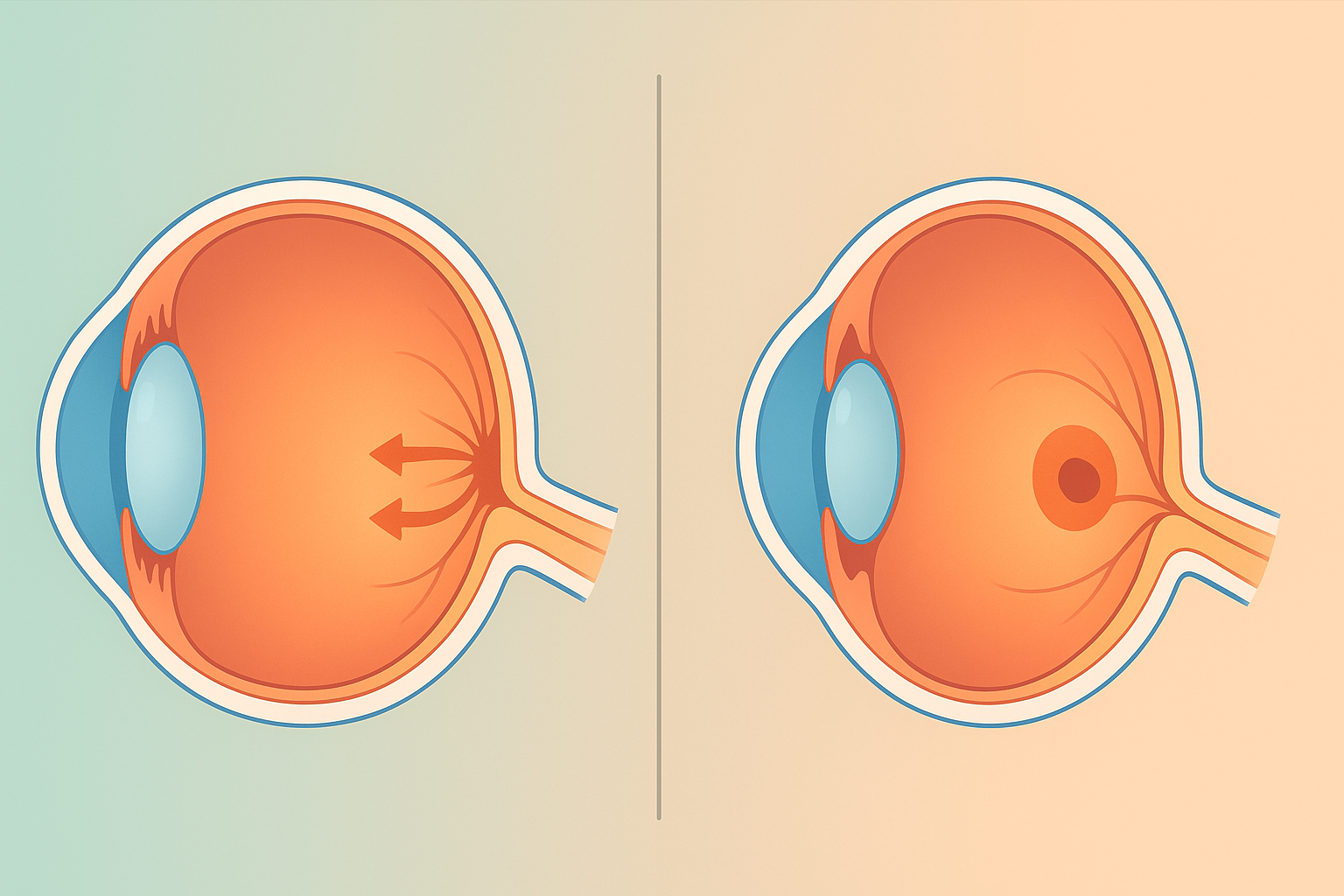
Macular pucker (epiretinal membrane) is a thin scar layer on the macula that contracts, wrinkling the retina and blurring or distorting central vision.
Myopic degeneration is severe nearsightedness that stretches and thins eye tissues, causing progressive vision loss and higher retinal detachment risk.
Pattern dystrophy is an inherited retinal disorder in which pigment collects in distinctive macular patterns, slowly causing central vision to blur.
Wet macular degeneration arises when abnormal retinal blood vessels leak beneath the macula, causing rapid distortion and loss of central vision.